Epoxy vs Polyurethane Adhesive: Which One Should You Choose?

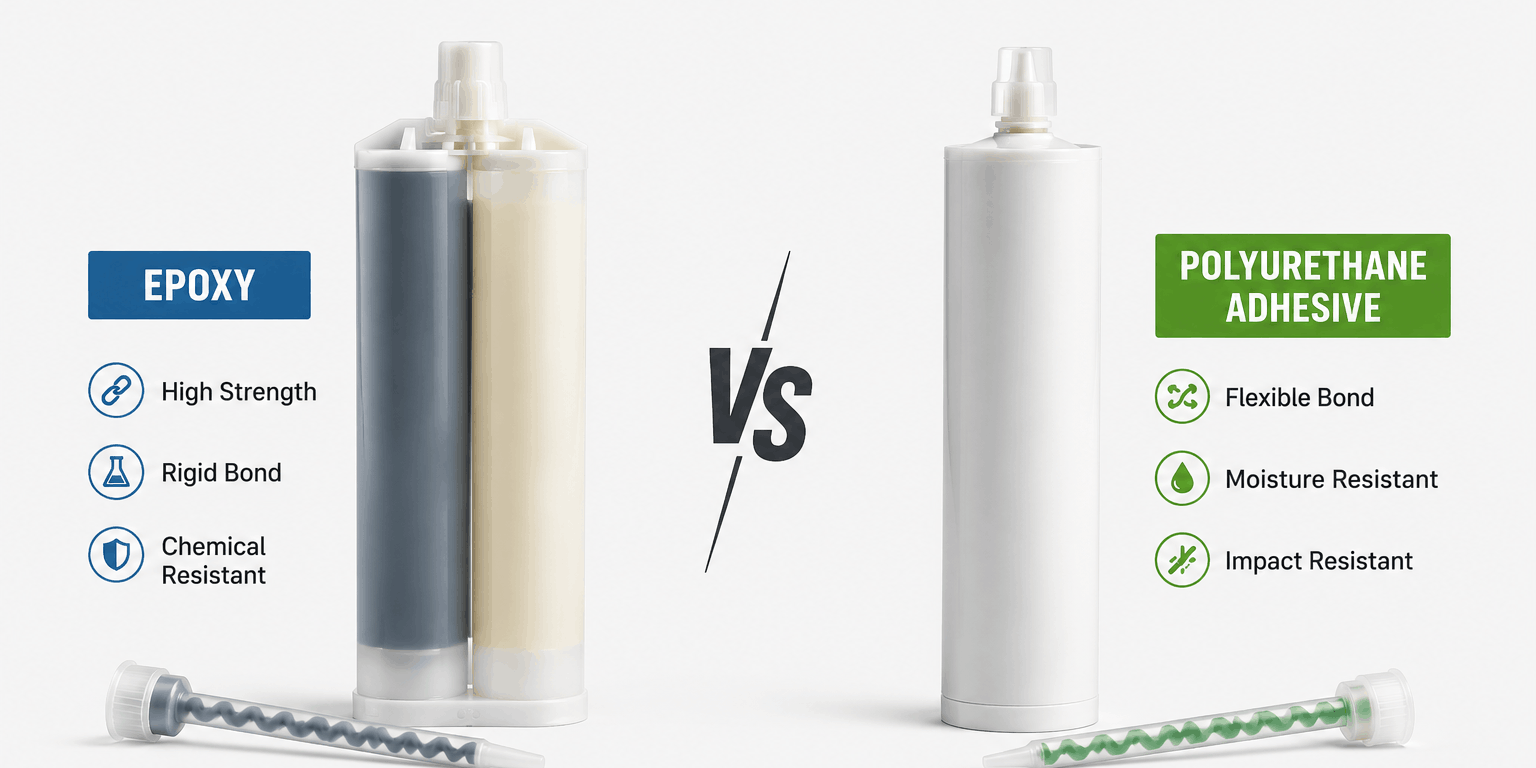
If you have ever stood in front of two tins of adhesive trying to figure out which one actually suits your job, you are not alone. Epoxy and polyurethane are both heavy hitters in the industrial bonding world, but they behave very differently once applied. Picking the wrong one can mean a joint that cracks under load, or one that never quite cures the way you expected.
At Synergy Bonding Solutions, we get asked this question almost every week by fabricators, furniture manufacturers, and industrial buyers across India. This guide breaks down how these two adhesive families actually differ, where each one earns its keep, and how to decide which fits your project.
What Is Epoxy Adhesive?
Recommended Products:
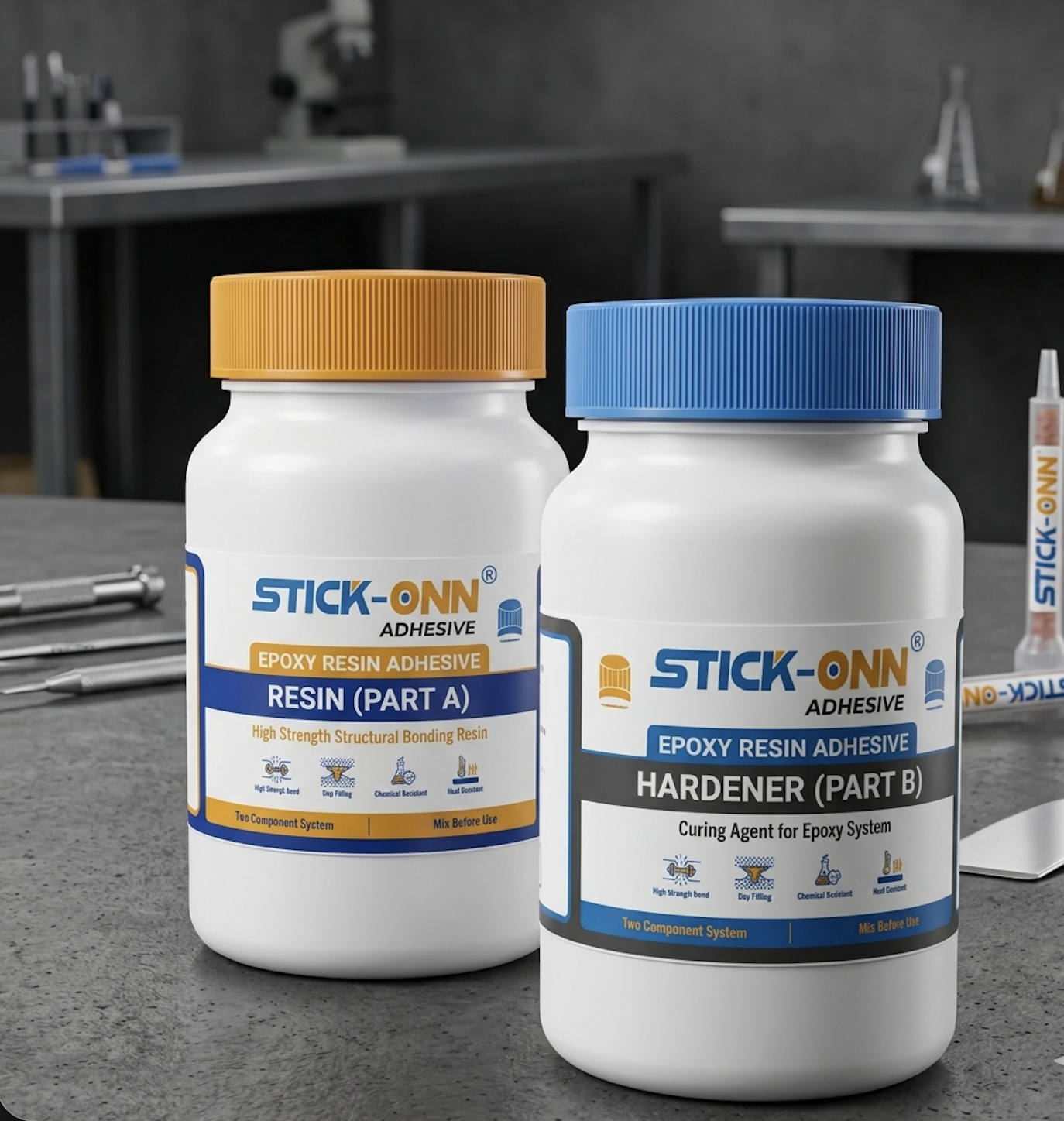
STICK-ONN Epoxy Resin
Request quoteEpoxy adhesive is a two part system built from a resin and a hardener. When the two are mixed, a chemical reaction kicks off that turns the liquid into a hard, rigid solid. That reaction is what gives epoxy its reputation for strength.
Once cured, epoxy bonds are dense, rigid, and resistant to heat, chemicals, and load. This is why epoxy shows up so often in structural applications where the joint needs to hold firm and not flex under stress. It also bonds extremely well to metal, glass, and many plastics, which makes it a go to choice for engineering and assembly work.
What Is Polyurethane Adhesive?
Recommended Products:
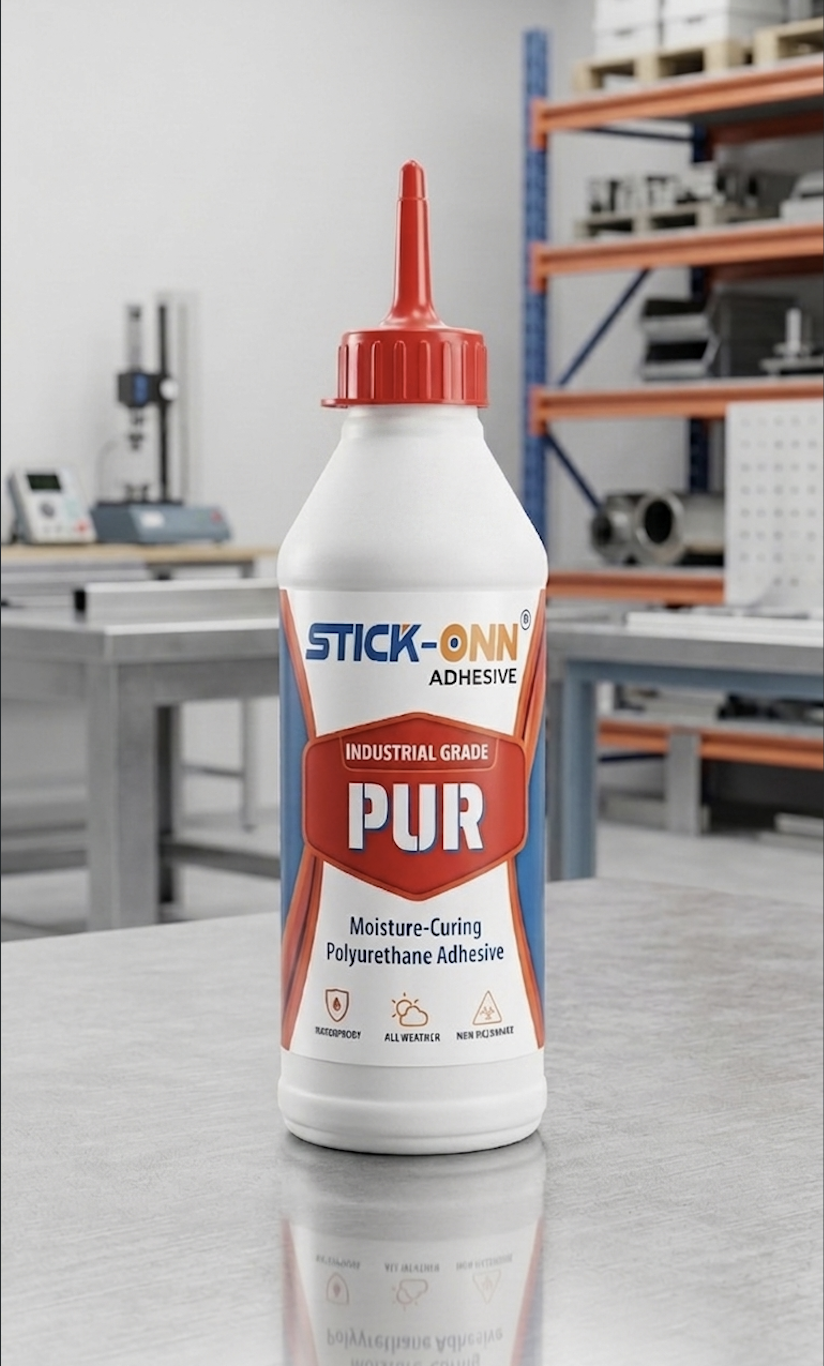
STICK-ONN PUR Adhesive
Request quotePolyurethane adhesive, often shortened to PU adhesive, can come as a one part moisture curing system or a two part system depending on the application. Unlike epoxy, PU adhesives cure into a bond that stays somewhat flexible rather than going completely rigid.
That flexibility is the whole point. Polyurethane can absorb vibration, expansion, and contraction without the joint failing, which makes it ideal for materials that move or shift with temperature and humidity, like wood and certain composites. PU adhesives are also known for excellent gap filling ability and strong adhesion to porous surfaces.
Epoxy vs Polyurethane: Key Differences
Recommended Products:
STICK-ONN PUR Adhesive
Request quote| Property | Epoxy Adhesive | Polyurethane Adhesive |
|---|---|---|
| Bond character | Rigid, high tensile strength | Flexible, good impact absorption |
| Cure time | Slower, often needs mixing ratio precision | Faster in one part moisture cure systems |
| Temperature resistance | Higher heat resistance overall | Good, but generally lower than epoxy |
| Moisture resistance | Strong once fully cured | Excellent, many grades are inherently water resistant |
| Gap filling | Limited, best on tight fitting joints | Very good, handles uneven surfaces well |
| Substrate range | Metal, glass, rigid plastics, composites | Wood, foam, panels, plastics, porous materials |
| Flexibility after cure | Low, brittle under heavy shock | High, tolerates movement and vibration |
| Typical cost | Higher for industrial grades | Generally more economical for large volume use |
This table is a starting point rather than a rulebook. Actual performance depends heavily on the specific formulation, substrate preparation, and environmental conditions on site, which is exactly why custom formulation conversations matter.
When to Use Epoxy Adhesive?
Recommended Products:
STICK-ONN Epoxy Resin
Request quoteEpoxy earns its place when the application demands rigidity and load bearing strength above everything else. A few common scenarios:
- Structural metal to metal bonding in machinery and equipment assembly
- Electronics and component encapsulation where heat and chemical resistance matter
- Tooling and mold repair work
- Applications where the bonded joint cannot flex or shift at all
If your project involves dissimilar rigid substrates, high mechanical stress, or exposure to solvents and chemicals, epoxy is usually the safer bet.
When to Use Polyurethane Adhesive?
Recommended Products:
STICK-ONN PUR Adhesive
Request quotePolyurethane makes more sense when the bond needs to move with the material or absorb some shock. Common use cases include:
- Furniture and wood panel assembly where seasonal expansion and contraction occur
- Foam and mattress bonding, where flexibility is non negotiable
- Flooring installations exposed to foot traffic and minor substrate movement
- Footwear and packaging applications requiring impact resistance
Because PU adhesives handle porous and uneven surfaces so well, they are also a strong choice when substrate preparation cannot be perfectly controlled on the shop floor.
Which Adhesive Is Right for Your Project?
A simple way to think about it: if your joint needs to stay completely still and resist heat or chemicals, lean toward epoxy. If your joint needs to flex, absorb movement, or bond porous and uneven materials, polyurethane is usually the better fit.
That said, real world manufacturing rarely fits into a clean either or box. Substrate combinations, load direction, humidity exposure, and production speed all play a role. This is where a conversation with a formulation team pays off, since off the shelf products do not always match the exact demands of a production line.
Frequently Asked Questions
Is epoxy stronger than polyurethane adhesive?
In terms of rigid tensile strength, yes, epoxy typically outperforms polyurethane. But strength is not the only measure that matters. Polyurethane often outperforms epoxy in flexibility and impact resistance, which counts as a different kind of strength depending on the application.
Can polyurethane adhesive be used outdoors?
Yes. Many polyurethane formulations are built specifically for moisture and weather resistance, making them suitable for outdoor furniture, flooring, and construction applications.
Which adhesive is better for wood bonding?
Polyurethane is generally the better choice for wood, since wood expands and contracts with humidity and temperature, and PU's flexibility handles that movement without cracking.
Are epoxy adhesives waterproof?
Once fully cured, most industrial epoxy adhesives offer strong water resistance, though the exact rating depends on the specific formulation.
Can these adhesives be custom formulated for specific industry needs?
Yes. Both epoxy and polyurethane chemistries can be adjusted for cure speed, viscosity, flexibility, and substrate compatibility based on your production requirements.
Synergy Bonding Solutions has been manufacturing adhesives since 2007, and our product range spans both epoxy and polyurethane chemistries under brands like POLYGUM®, OMBOND®, OMCOL®, OMFIX®, and STICK-ONN®. Our in house R&D team works directly with manufacturers to fine tune formulations for specific substrates, climates, and production requirements, and we supply in bulk across India with reliable, tested consistency batch after batch.
Looking for the right adhesive for your application? Get in touch with our technical team.